Applications of scanning-probe electrochemistry
Our SECM introduction explains the operating principles. This archived article explores what research groups have investigated using local techniques, drawing on BioLogic’s learning materials and focusing on energy applications. The 17% share in the retained graphic belongs to an earlier manufacturer compilation; it is not a current comprehensive literature statistic.
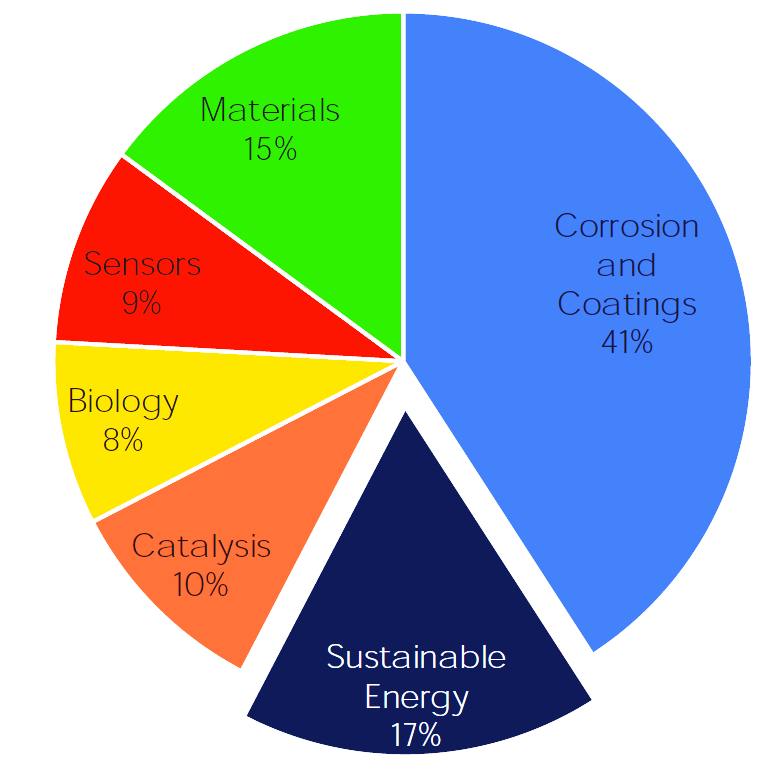
The examples are primarily fundamental research, including academic and industrial collaborations. They address electrode swelling, grains and grain boundaries, battery interphases, composition-library screening, photovoltaic energy levels, fuel-cell catalysts and new energy materials.
SECM: local activity maps
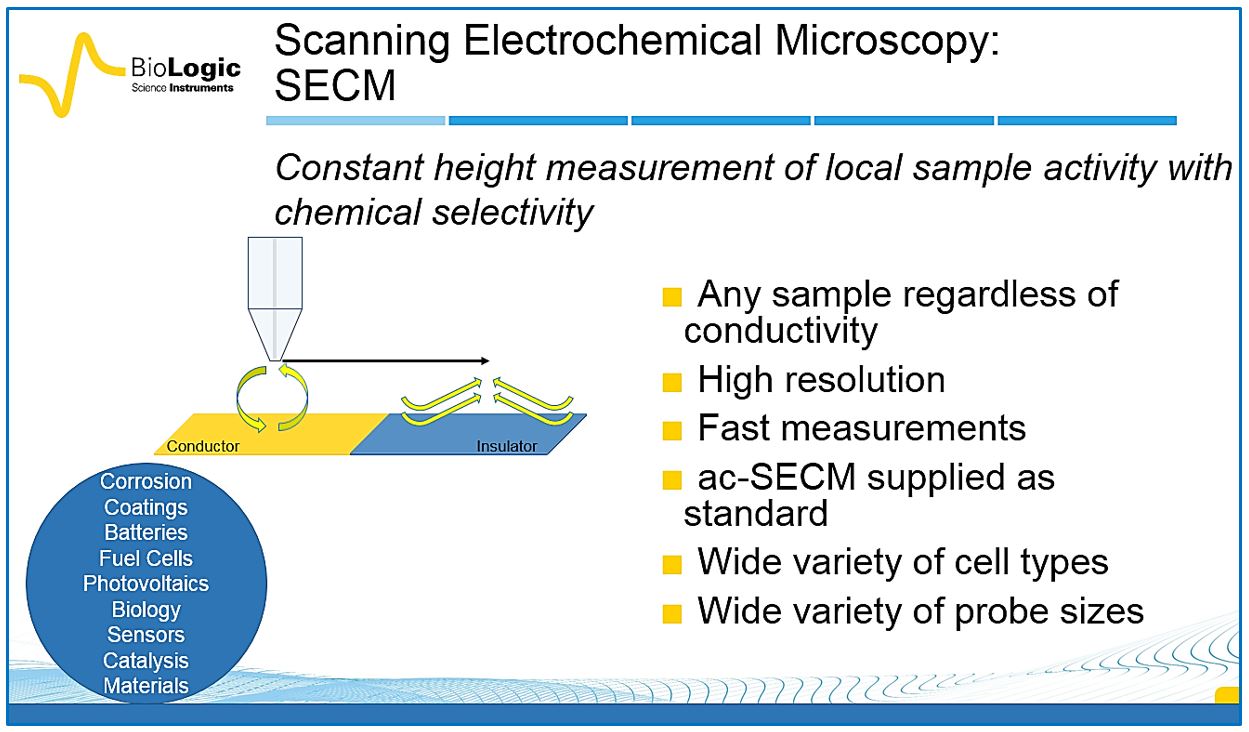
SECM records a local electrochemical response and associates it with x–y position to construct a map. Activity and topography can both affect that response; the introductory article explains feedback and distance effects.
AC-SECM
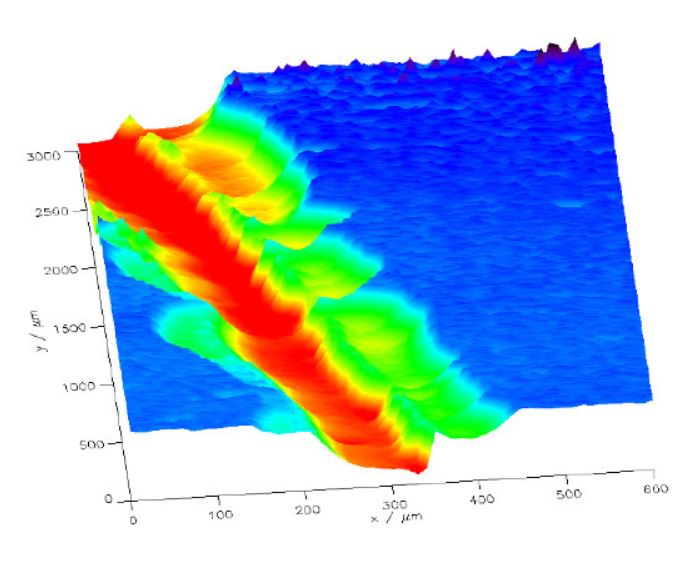
AC-SECM applies sinusoidal excitation to the probe and measures an impedance response influenced by the nearby sample. A lateral scan at one frequency produces a contrast map; holding the probe at a selected position permits a frequency spectrum. This provides a route to examining local interfacial processes, but it is not identical to LEIS or automatically the intrinsic impedance of a patch of material. BioLogic AC-SECM introduction.
Batteries and supercapacitors
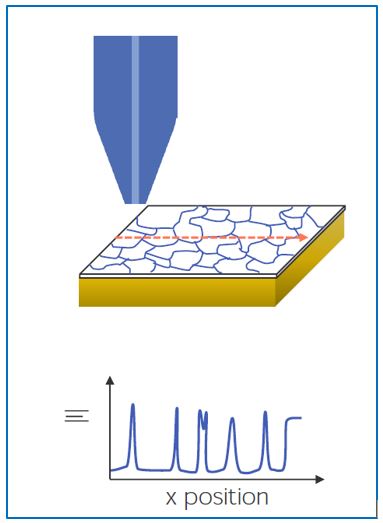
Heterogeneous active layers, insulating inclusions and uneven reactions can be difficult to localise from whole-electrode measurements. Local mapping complements the integrated response by showing where contrasts occur.
Tracking interphase evolution
The solid-electrolyte interphase, SEI, changes during formation and cycling. Its electronic insulation and fragility make local measurements valuable. Repeating maps of the same region can track changes in the probe response, subject to probe stability, distance and scan time.
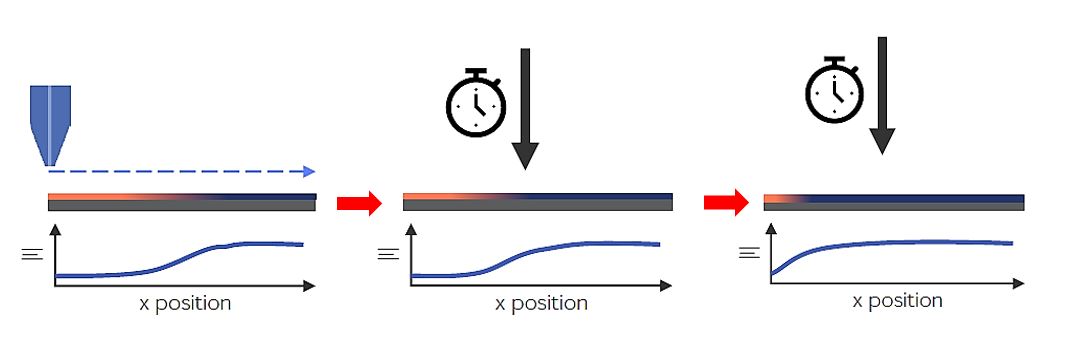
The archived SCAN-Lab workflow illustrates looping scans over hours or days. Available sequence controls depend on the installed version and configuration; repeating a scan alone does not establish that the sample stayed in the intended condition.
Non-contact measurement under suitable conditions
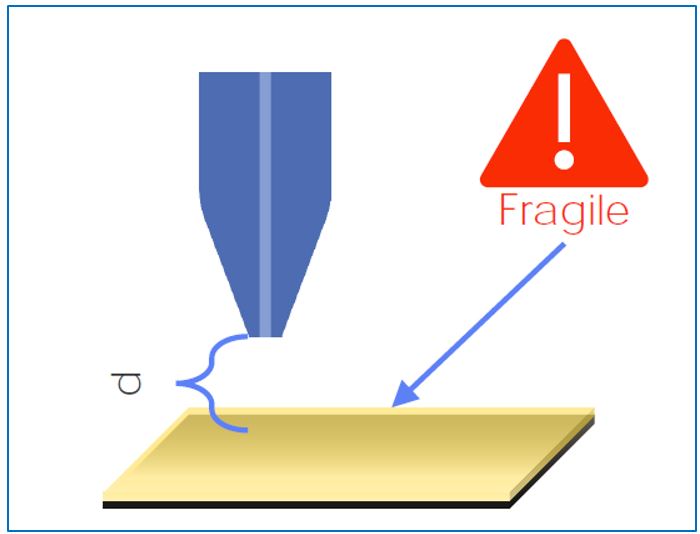
An appropriate gap can avoid mechanical contact with delicate surfaces. Non-contact does not guarantee absence of chemical disturbance. In situ work can approach the operating environment, but does not automatically remove preparation requirements; electrolyte or mediator may modify the sample.
Understanding conductive or insulating layer formation requires measurements at relevant potentials and cycling states, with independent checks of how the chosen probe reports those changes.
Polarised samples
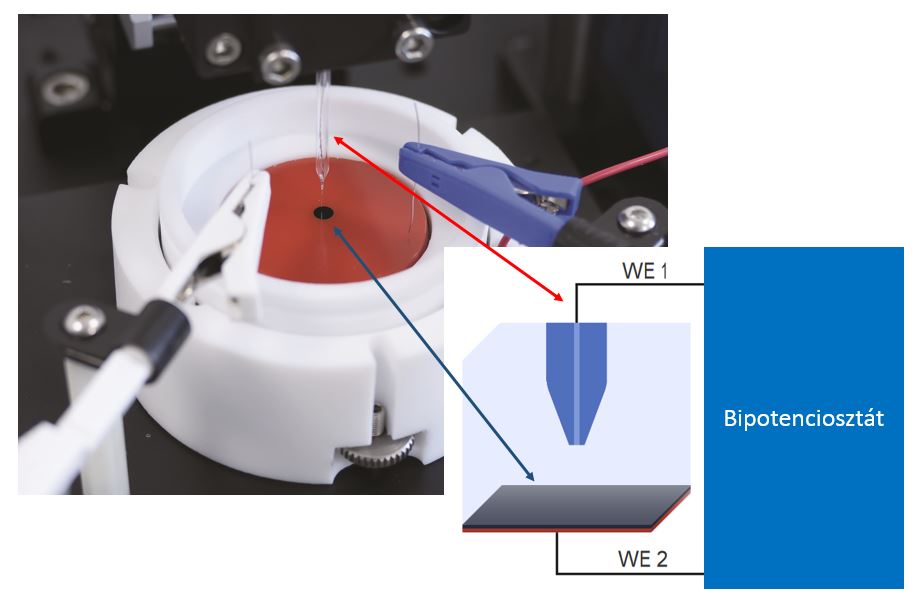
Many local electrochemical techniques operate in electrolyte. This facilitates in situ configurations but does not by itself establish operando equivalence to a complete device. Where both probe and sample require independent potential control, an appropriate bipotentiostat configuration is needed.
Fuel-cell catalysts and composition libraries
Catalyst composition, crystallographic orientation, heterogeneity and spatial arrangement affect activity. Local measurements can compare regions or material compositions in a shared solution environment.
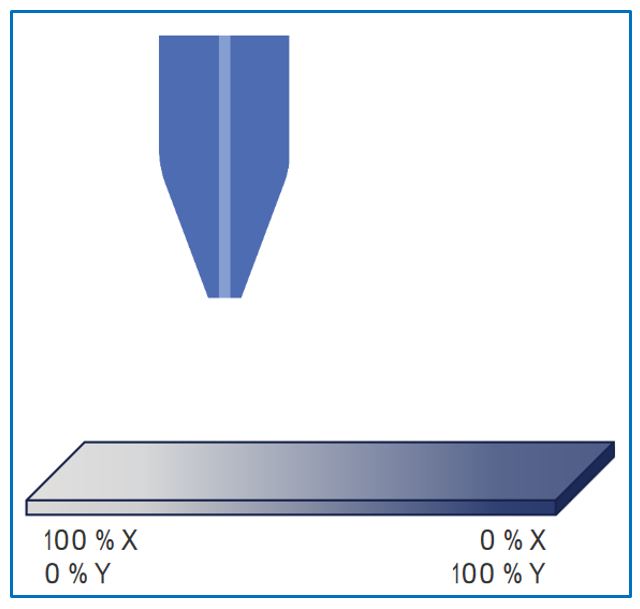
A combinatorial library places multiple compositions on one substrate, allowing a programmed scan to examine them without changing samples after every measurement. Such screening can increase throughput, but valid comparisons still require equivalent exposure, transport, area and measurement conditions. A map is a screening result, not automatically complete characterisation of every composition.
For proton-conducting membranes or proton-involving reactions, a suitably selective calibrated method can investigate activity or transport:
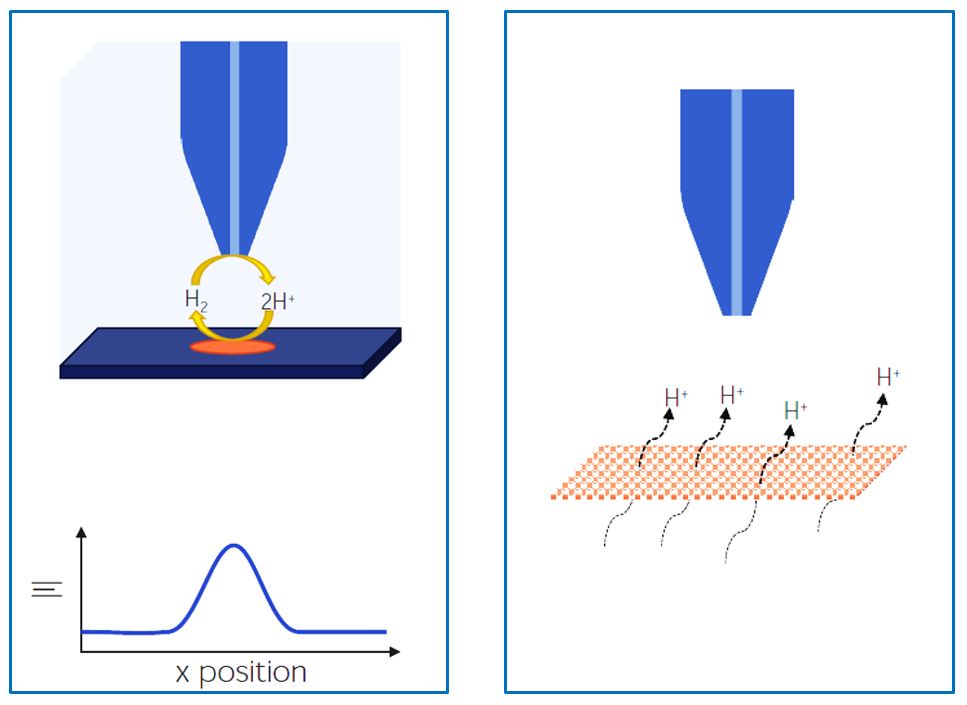
Electrode material, potential and calibration determine chemical sensitivity. A raw SECM current is not a universal direct proton-concentration measurement. pH-sensitive mapping requires a suitable sensing response and calibration; this chemical sensitivity is one reason the technique is sometimes described as a chemical microscope.
LEIS: local electrochemical impedance spectroscopy
LEIS probes local impedance using an arrangement distinct from AC-SECM. It can map a single-frequency response or obtain a spectrum at a fixed location.
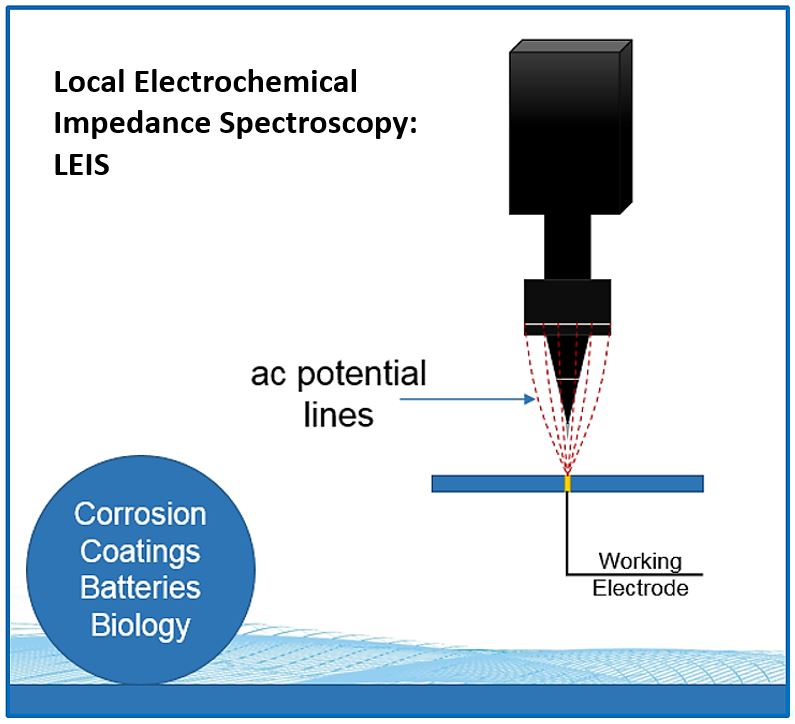
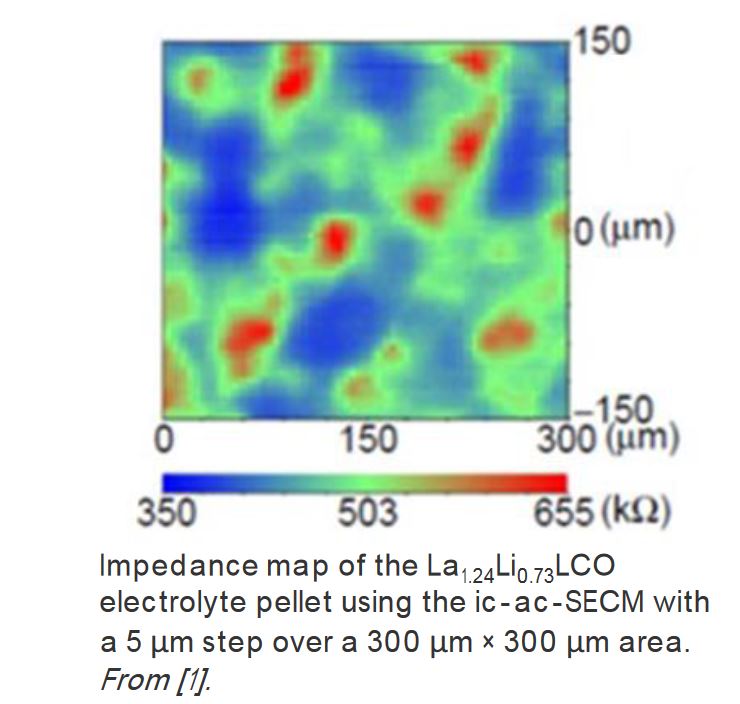
Heterogeneous regions may exhibit different frequency-dependent responses. However, geometry, electrolyte conductivity and interfacial processes all contribute. Neither AC-SECM contrast nor LEIS contrast is automatically a direct conductivity map. The archived grain/grain-boundary example cites T. Takami et al.; its bibliographic details should be checked against the original paper before reuse as a formal citation.
The original further-reading examples include:
- Self-healing coatings: Raj, Y. Morozov, L.M. Calado, M.G. Taryba, R. Kahraman, A. Shakoor, M.F. Montemor, Electrochimica Acta 319 (2019), 801–812.
- Corrosion beneath coatings on aluminium: V.S. Philippe, G.W. Walter, S.B. Lyon, Journal of the Electrochemical Society 150 (2003), B111–B119.
- Alloy composition and corrosion: Liu, Y. Wang, S. Pan, Q. Zhao, C. Zhang, S. Gao, Z. Guo, N. Guo, W. Sand, X. Chang, L. Dong, Y. Yin, Corrosion Science 149 (2019), 153–163.
- Applied stress and corrosion: A. Zhang, Y.F. Cheng, Corrosion Science 52 (2010), 960–968.
- Battery-electrode surface treatments: Wang, L.M. Housel, D.C. Bock, A. Abraham, M.R. Dunkin, A.H. McCarthy, Q. Wu, A. Kiss, J. Thieme, E.S. Takeuchi, A.C. Marschilok, K.J. Takeuchi, ACS Applied Materials & Interfaces 11 (2019), 19920–19932.
SDC: scanning droplet cells
A scanning droplet cell confines the electrolyte contact to a small region of a conducting or semiconducting sample. The contacted region functions as the working electrode in a local electrochemical cell.
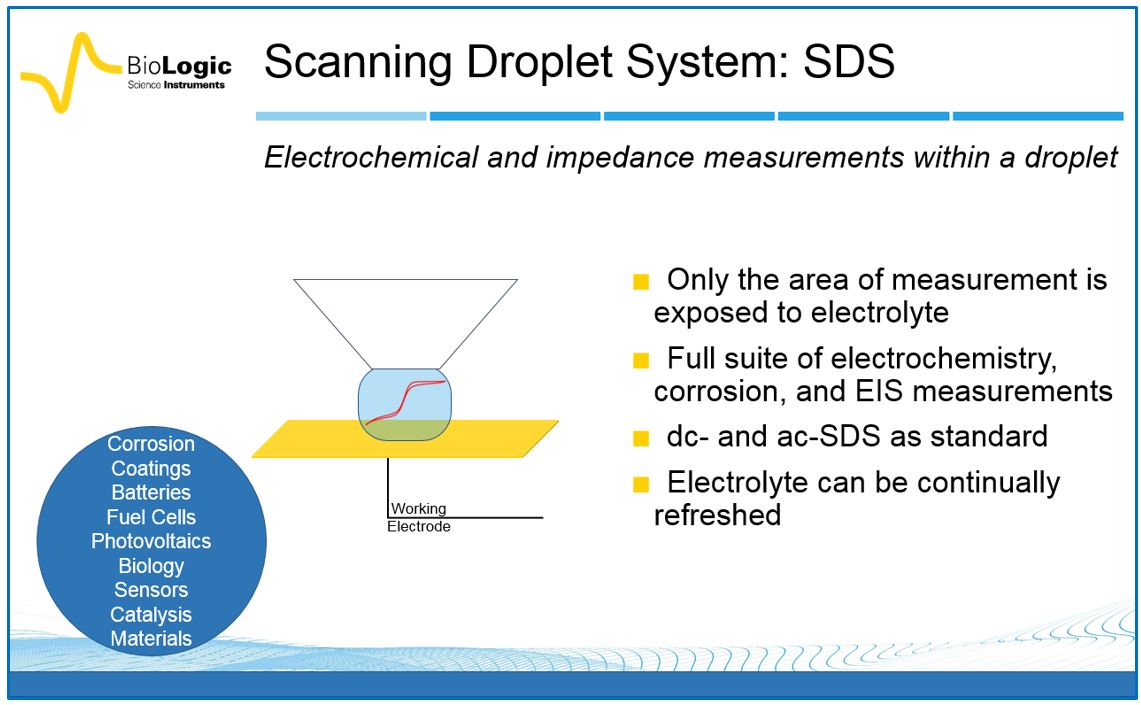
The head contains electrolyte and suitable counter/reference connections:
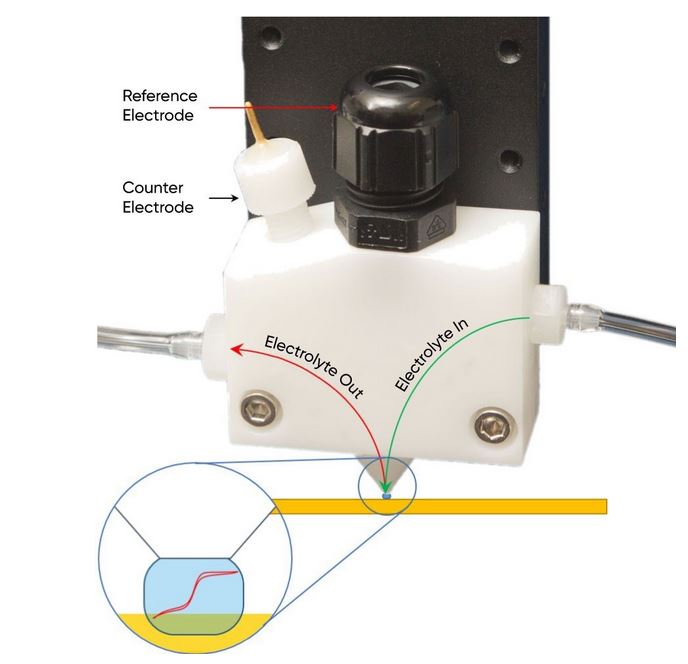
A liquid bridge forms between the head and sample. Its footprint depends on the aperture, electrolyte, wetting and surface condition. This footprint limits the spatially sampled area; it is not determined by positioning step size alone.
Confining exposure can be useful when electrolyte changes the surface, including corrosion studies. Conventional experiments such as voltammetry then interrogate a local region instead of the entire sample. Applying their theory still requires accounting for geometry, wetted area and transport in the small cell.
Archived application examples:
- Variation of corrosion across a specimen: M. Thuss, J.R. Kish, J.R. McDermid, in Magnesium Technology 2012, Springer, 403–408.
- Doping effects in donor/acceptor materials: Gasiorowski, A.I. Mardare, N.S. Sariciftci, A.W. Hassel, Journal of Electroanalytical Chemistry 691 (2013), 77–82.
- Hydrogen-production catalyst screening: H. Meekins et al., International Journal of Hydrogen Energy 45 (2020), 1940–1947.
- Combinatorial catalyst libraries: Li, H.S. Stein, K. Sliozberg, J. Liu, Y. Liu, G. Sertic, E. Scanley, A. Ludwig, J. Schroers, W. Schuhmann, A.D. Taylor, Journal of Materials Chemistry A 5 (2017), 67–72.
- Grain and grain-boundary effects: W. Hassel and M. Seo, Electrochimica Acta 44 (1999), 3769–3777.
SKP: scanning Kelvin probe
SKP is a non-contact vibrating-capacitance method that measures contact potential difference between probe and sample. Scanning maps variations related to surface work function; calibration with an appropriate reference is needed for an absolute work-function estimate.
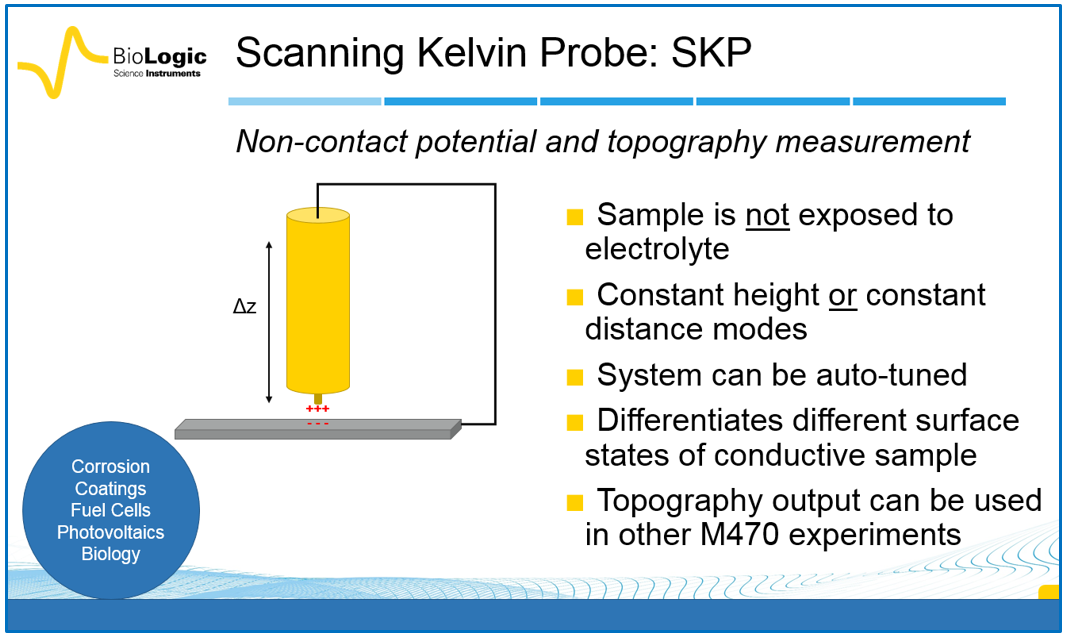
The method builds on Kelvin’s 1898 work and Zisman’s 1932 development. In suitable corrosion configurations, an appropriately calibrated contact-potential measurement can also be related to corrosion potential; this is not a universal conversion independent of environment.
Work function and the measurement sequence
Work function is the minimum energy required to remove an electron from the Fermi level into vacuum. It depends on surface condition, including oxides, adsorbates and contamination, as well as material composition.
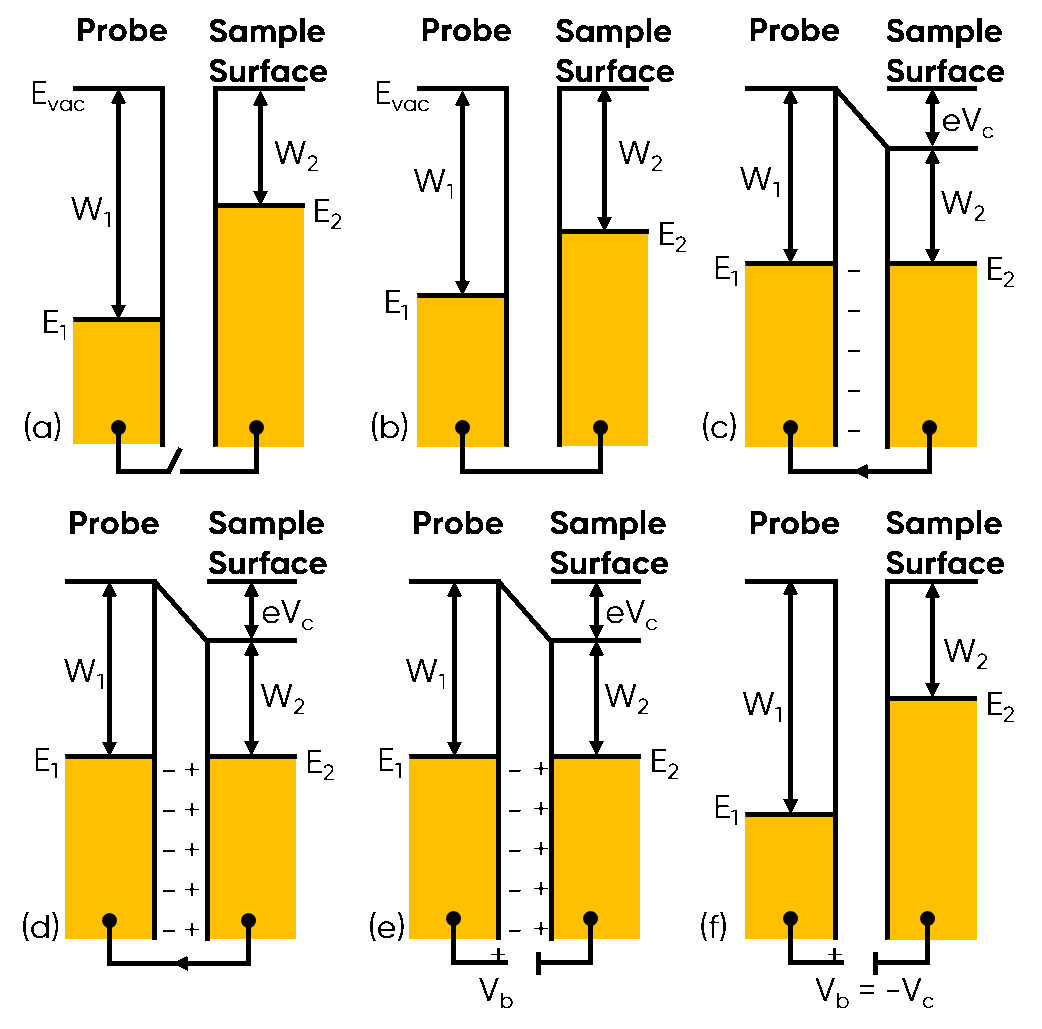
The illustration starts with probe and sample before electrical connection, each with its own Fermi level. Connecting them permits charge redistribution and establishes a contact potential difference. A backing potential is adjusted to null the vibration-induced capacitive signal. The initial unconnected state is not the state of normal scanning measurement.
SKP is a distinct scanning-probe method, not a DC-SECM operating mode. BioLogic’s SKP explanation discusses its measurement basis.
Archived applications include work functions of photovoltaic materials, contamination screening of silicon, fingerprint detection, effects of surface treatment on catalysts, self-healing coatings, coating degradation and local corrosion.
SKP glossary
- Contact potential difference: potential difference associated with electrically connected materials and their equilibrated electron chemical potentials.
- Fermi level: electron chemical potential; in a metal at 0 K it coincides with the highest occupied-state energy.
- Work function: energy required to remove an electron from the Fermi level to vacuum.
SKP references retained from the archive
- Lord Kelvin, Philos. Mag., 46 (1898) 82-120
- A. Zisman, Rev. Sci. Instrum., 3 (1932) 367-370
- Stratmann, H. Streckel, Corros. Sci., 30 (1990) 681-696
- Stratmann, H. Streckel, Corros. Sci., 30 (1990) 697-714
- Wicinski, W. Burgstaller, A. W. Hassel, Corros. Sci. 104 (2016) 1–8
- Liu, X. Cheng, S. Wang, K. Zhang, Y. Gu, Phys. Chem. Chem. Phys. 17 (2015) 17041-17052
- Cavalcoli, A. Cavallini, M. Rossi, S. Binetti, F. Izzia, S. Pizzini, J. Electrochem. Soc. 150 (2003) G456-G460
- Williams, H. N. McMurray, D. Worsley, J. Forensic Sci. 46 (2001) 1085-1092
- S. Zance, S. Ravichandran, Appl. Phys. A 125 (2019) 456
- Fan, Y. Zhang, W. Li, W. Wang, X. Zhao, L. Song, Chem. Eng. 368 (2019) 1033-1044
- J. Borth, E. B. Iezzi, D. S. Dudis, D. C. Hansen, CORROSION 75 (2019) 457-464
- Zhang, F. Zhou, K. Xiao, T. Cui, H. Qian, X. Li, J. Mater. Eng. Perform. 24 (2015) 2688-2698
SVET/SVP: scanning vibrating electrode or probe
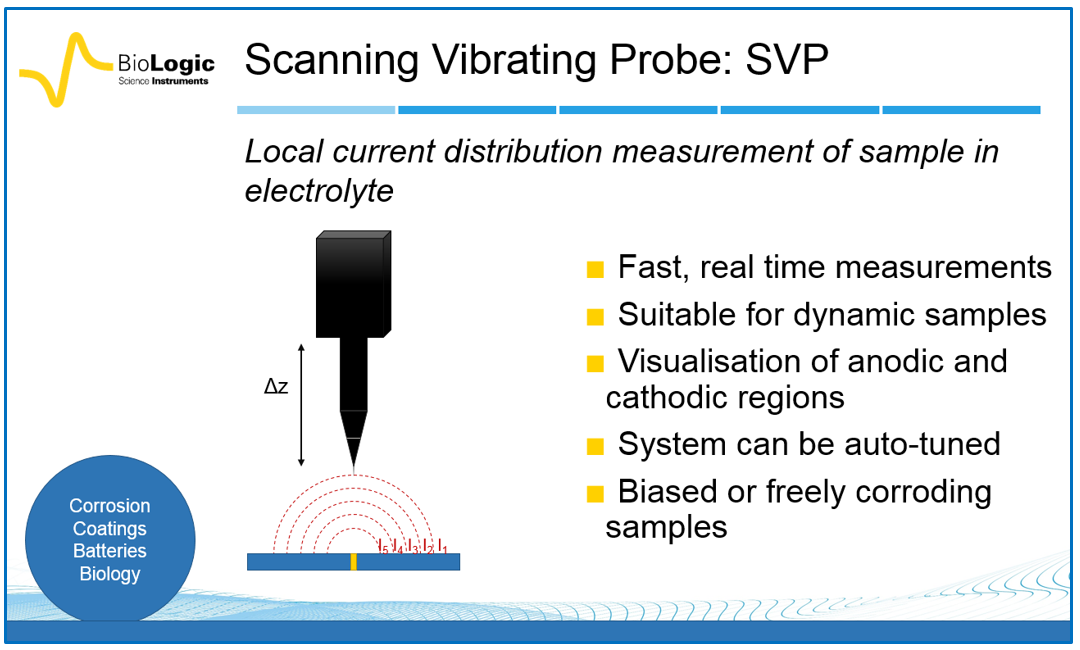
Ionic current above an active or polarised sample produces a solution-potential gradient. Its magnitude depends on both activity and conductivity. A vibrating probe samples this gradient; conversion to local current density requires appropriate geometry, conductivity information and calibration.
A piezoelectric actuator typically vibrates the probe perpendicular to the surface. At a fixed lateral position and approximately steady conditions, the detected potential changes with the probe’s vertical position. A lock-in amplifier extracts the component at the vibration frequency. Calibrate with a known current source when quantitative current-density mapping is required.
Archived plant-leaf example
The original example used an SVP470 to examine the lower surface of a detached spider-plant leaf in tap water. A glass dish replaced the TriCell body, P/N U-TRICELL, to allow sample levelling.
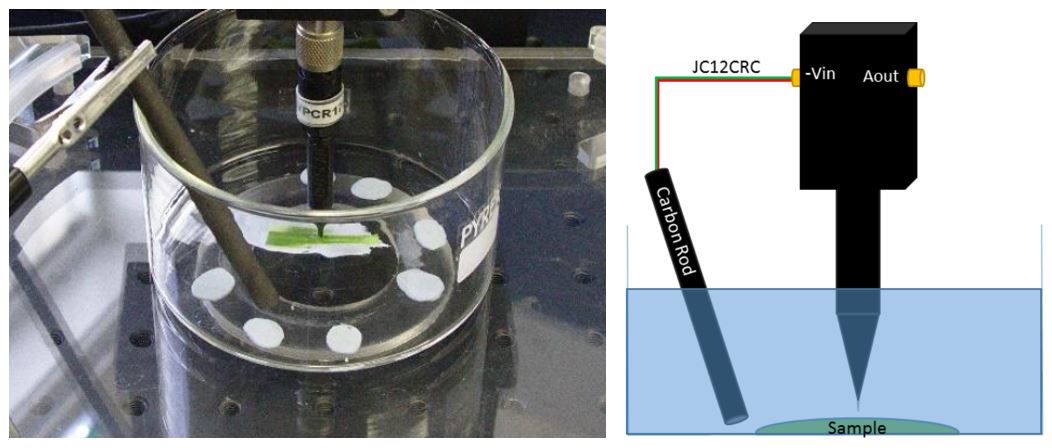
A second electrode provides the measurement reference/return path; the unpolarised example used a carbon rod. The archived map identifies epidermal features, stomata and a smoother region:
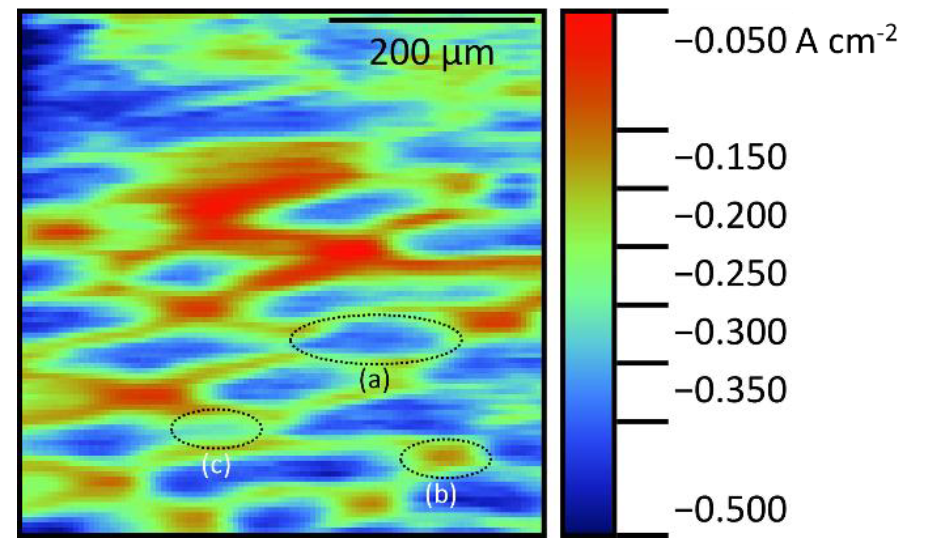
The original interpretation reports larger local current-density signals over epidermal cells than over stomata. This is a reported example, not a new validation of morphology or physiology in the present revision.
Choosing a technique: editorial checks
Record mediator and gap for SECM; frequency and geometry for AC-SECM/LEIS; actual wetted area for SDC; and reference and environment for SKP. For SVET, document conductivity and current-density calibration. Each method maps a different response. A colour map by itself does not establish a unique mechanism, and acquisition time can mix spatial and temporal changes.
Related local guides: SECM principles and EIS data quality. For application-specific questions, contact info@labornite.hu.