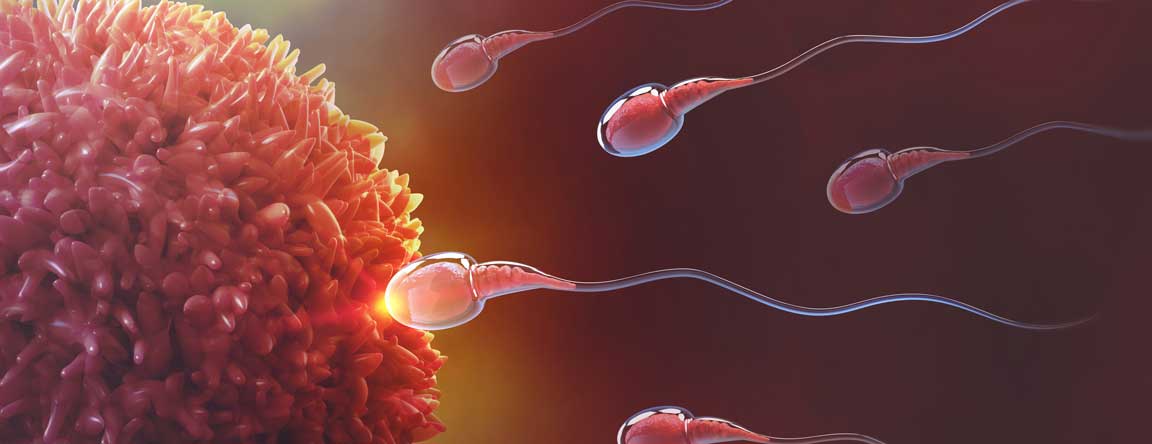
The original manufacturer account is Understanding the signaling pathways and molecular components of sperm using stopped-flow. The research described belongs to the cited investigators; it is not an EC Labor experiment.
How sperm locate an egg is one question in fertilisation research. Understanding the signalling mechanisms supports reproductive biology, but the experiment discussed here is not a clinical fertility test.
Chemotaxis is directed movement in response to a chemical stimulus. Chemical signals, temperature gradients and fluid flows can influence mammalian sperm movement. In sea urchins, which fertilise externally, chemical cues from eggs play an important role. Their sensitive signalling makes sea-urchin sperm a model system for chemotaxis research; properties of a particular species or receptor should not be generalised to all sperm.
The reported stopped-flow study
Hamzeh and colleagues describe the methods in Kinetic and photonic techniques to study chemotactic signaling in sea urchin sperm, Methods in Cell Biology, 2019, 151, 487–517. Authors include Timo Strünker and U. Benjamin Kaupp. Following rapid signalling responses requires fast mixing and optical detection with adequate sensitivity.
According to the manufacturer account, the work used an SFM-4000. Access to its observation head enabled fluorescent indicators to follow Na⁺ and Ca²⁺ signals, pH and membrane potential. Rapid mixing can be combined with photolysis: after stimulation with a chemoattractant, light releases a caged messenger to provide a further stimulus in the observation cell. Select the actual indicators and timing from the original methods publication.
Mixing rate and preservation of the sample
Sperm cells are mechanically sensitive, so shear loading and pressure changes matter. Independent SFM stepper motors allow injection rates to be adjusted. Cell integrity must nevertheless be checked separately: adjustable injection alone does not demonstrate that a particular setting is gentle enough.
These experiments involve living cells in a measurement cell. The original article’s use of “in vivo” should not be taken to mean measurement inside an organism. Document final concentrations after mixing, dead time and sperm motility.
Sample consumption depends on configuration
The historical manufacturer account describes reduced consumption with a microvolume µSFM configuration: 16 µl for the reported work and 3 µl in other applications. These are context-specific reported values, not universal consumption or sensitivity guarantees for stopped-flow measurements. Mixing ratio, observation cell, rinsing, repeat count and dead volume jointly determine total sample requirements.
Stopped-flow helps resolve the timing of rapid responses associated with ion channels and chemotactic stimuli. Specify mixing configuration, detection wavelength, indicator and achievable dead time separately. The current SFM product page is a starting point for configuring the instrument.